I get asked this comparison constantly. And honestly, it's a good question — because these three cities look similar on paper (EU capitals, similar population sizes, growing economies) but behave very differently as real estate markets. The answer depends almost entirely on what you're trying to achieve.
Let me give you my honest take after working with buyers across all three markets.
Tallinn: the most expensive, and for good reason
Tallinn has had an extraordinary decade. Property prices in the city centre have more than doubled since 2015, and the premium end of the market is now genuinely comparable to cities like Helsinki or Warsaw. New apartments in the city centre regularly sell above €4,000 per square metre, and the best addresses are pushing €5,000–6,000.
Why? A few things came together. Estonia's digital reputation attracted tech companies and remote workers. The city has a relatively small housing stock. And investors got in early. That last part is the issue — for someone entering now, the growth has already happened. Rental yields have compressed as prices rose. You're buying into an already-mature market.
Tallinn is still a solid choice if capital preservation is your main goal. But if you're looking for the kind of upside that comes from entering a market before it moves — that window has largely closed.
Vilnius: steady, growing, slightly underrated
Vilnius is the interesting middle option. It's been growing consistently for the past five or six years, prices are still more accessible than Tallinn, and the city has a genuine tech and startup ecosystem developing around it. Several major financial institutions have relocated European operations there, which has driven demand for quality housing.
Entry prices in central Vilnius are roughly €3,000–4,500 per square metre for new builds. That's meaningful, but still below the Western European cities that Vilnius is increasingly compared to. Rental demand is solid, particularly from expat professionals.
The main limitation is that there's no single large-scale project reshaping a district the way that Riga Waterfront is reshaping Andrejsala. Growth in Vilnius is more diffuse — you're betting on the city continuing to develop steadily, which it probably will, but without a specific catalyst.
Riga: the lowest entry price with the largest catalyst
Here's what makes Riga different right now. Premium property in the city centre is still significantly cheaper than both Tallinn and Vilnius — generally €2,500–3,800 per square metre. And the market has been growing at 5–6% annually, meaning there's still room to run.
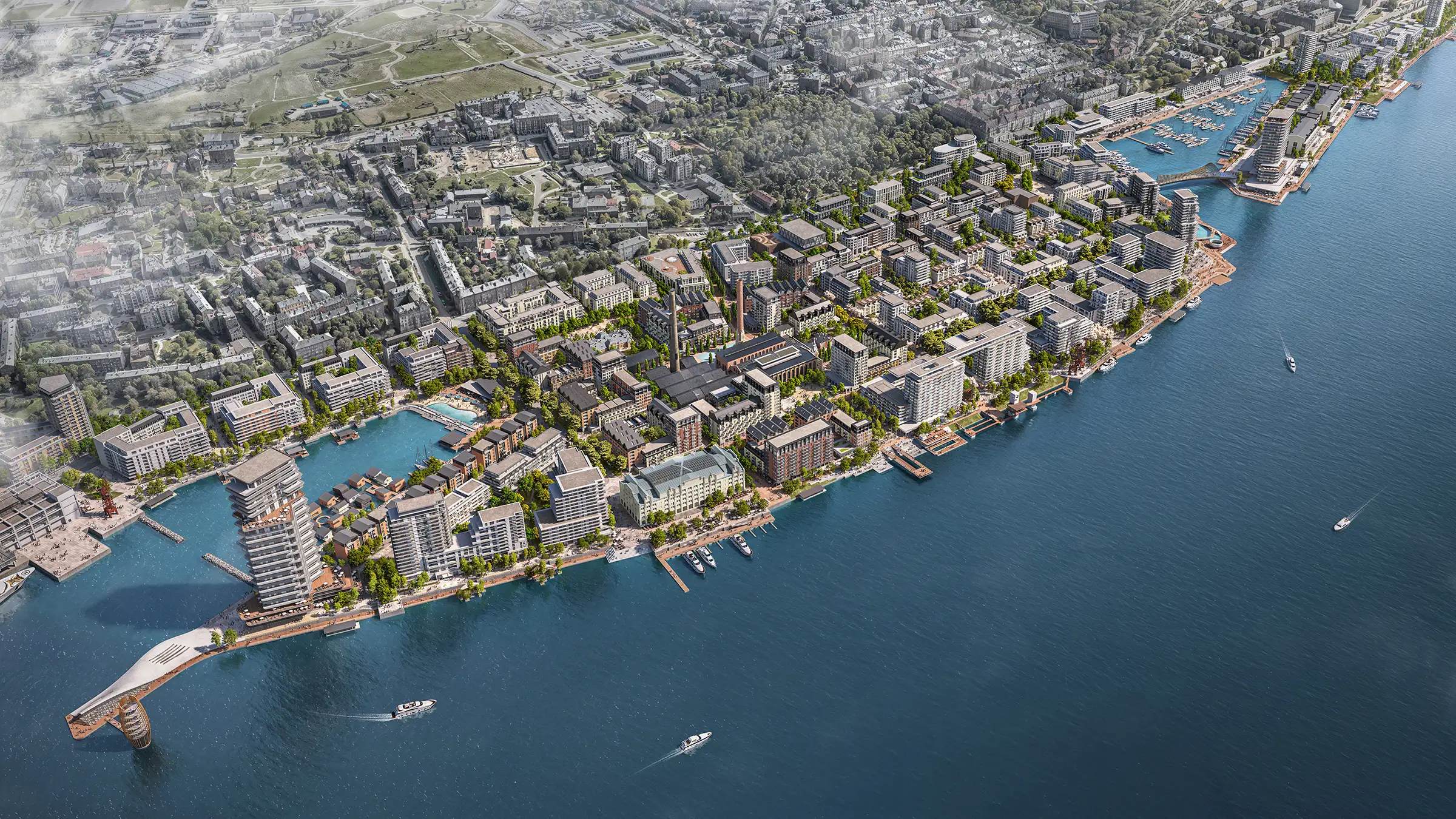
But the more interesting story is Andrejsala. The Riga Waterfront development is genuinely transformational for that part of the city. A 57-hectare former port area is being rebuilt from scratch by Eagle Hills — the same developer behind Belgrade Waterfront, which is widely cited as one of the best-performing real estate investments in Southeast Europe over the past decade. Buyers who entered Belgrade Waterfront in the early phases saw substantial capital appreciation by completion.
That doesn't guarantee the same will happen here. But the structural conditions are similar: underpriced market, major regeneration project, strong developer with a track record, EU legal framework. For off-plan buyers, the combination of below-market entry price and long-term neighbourhood uplift is the investment thesis.
Riga offers the lowest entry price among the three Baltic capitals, but comes with a specific large-scale catalyst that neither Tallinn nor Vilnius currently has: a 57-hectare waterfront regeneration project by an international developer with a proven track record.
Side by side
| Factor | Tallinn 🇪🇪 | Vilnius 🇱🇹 | Riga 🇱🇻 |
|---|---|---|---|
| New build price (centre) | €4,000–6,000/m² | €3,000–4,500/m² | €2,500–3,800/m² |
| Market growth (recent avg.) | Slowing, 3–4% | Steady, 4–6% | 5–6% annually |
| Gross rental yield | 3–4% | 4–5% | 4–6% |
| Major development catalyst | No single large project | Distributed growth | Riga Waterfront (57 ha) |
| Payment plan (off-plan) | Varies by developer | Varies by developer | 20/80 — 20% upfront |
So which one is right for you?
If you want the safest, most liquid market and aren't bothered by lower upside — Tallinn. If you want steady, predictable growth in a city that's still on its way up — Vilnius. If you want the highest potential return, the lowest entry price, and you understand that large-scale regeneration projects carry both opportunity and a longer time horizon — Riga.
None of these is the "wrong" answer. They just suit different goals. What I'd caution against is treating them as interchangeable, because they really aren't at this stage of their cycles.
If Riga is on your shortlist, the window for off-plan pricing at Riga Waterfront is finite — prices move up with each construction milestone, and the new phase launching in June 2026 is likely to go quickly. That's worth factoring into your timeline.